

Introduction
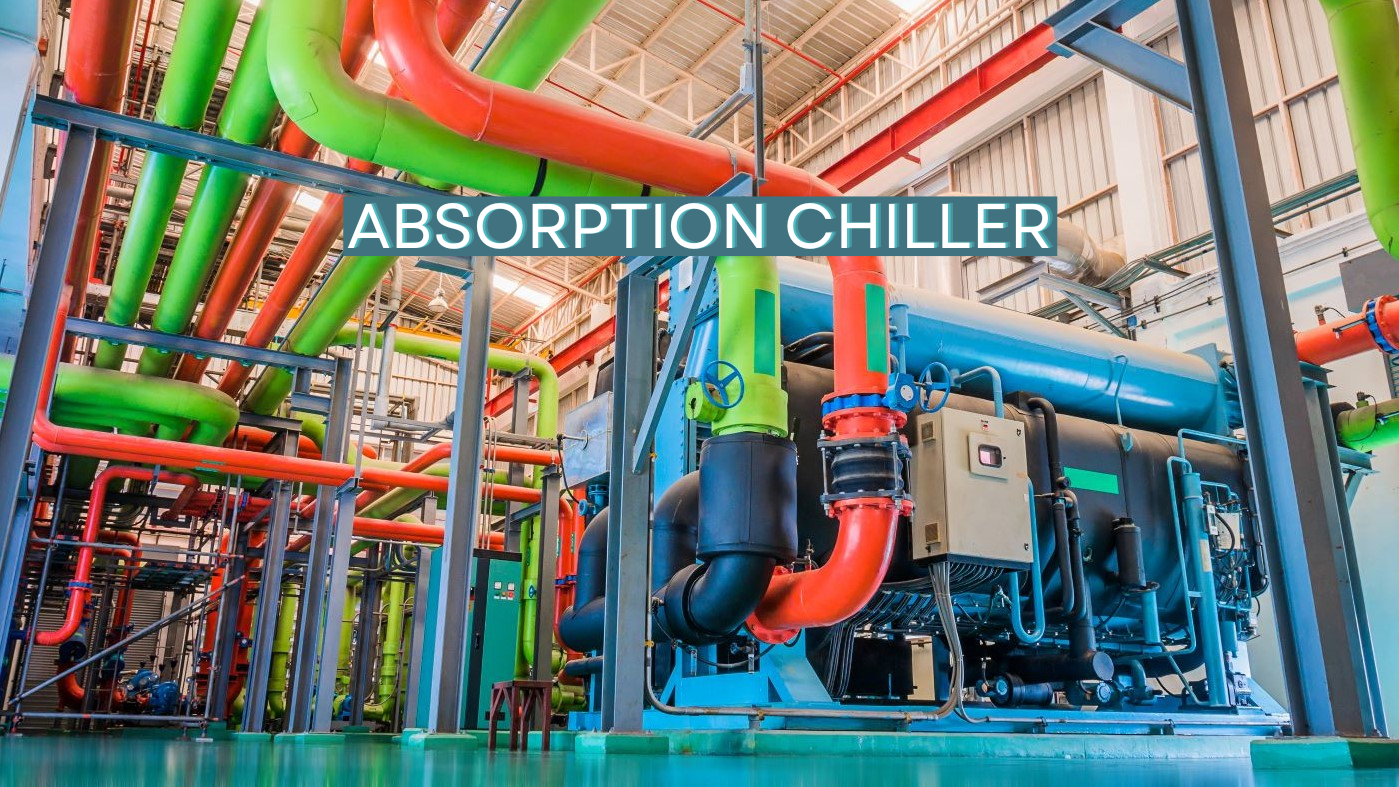
An Absorption chiller is a thermally driven cooling system designed to produce chilled water for air conditioning and industrial cooling applications. Unlike conventional refrigeration systems that depend mainly on electricity, this system uses heat energy as its primary driving force.
This cooling technology is widely used in industries, large commercial buildings, and energy plants where waste heat is available. Over time, absorption chillers have become an effective solution for improving energy efficiency and reducing electricity consumption in large cooling installations.
The concept is not new. It originated in early refrigeration experiments in the 19th century, but modern systems are far more advanced, efficient, and reliable. Today, this technology plays an important role in sustainable HVAC engineering.
Basic Concept of Absorption Cooling
The idea behind an Absorption chiller is based on a chemical and thermal process rather than mechanical compression. Instead of using a compressor powered by electricity, it uses a combination of refrigerant and absorbent to create a continuous cooling cycle.
In traditional systems, refrigerant gas is compressed using electricity. In this system, heat energy replaces that mechanical compression. This allows the system to work efficiently in environments where waste heat or steam is already available from industrial processes.
The most commonly used working pair is lithium bromide and water. Water acts as the refrigerant, while lithium bromide works as the absorbent. Together, they help produce a continuous cycle of evaporation and absorption, which results in chilled water production.
Working Principle of Absorption Chiller
The working process of an Absorption chiller is continuous and consists of four major stages that operate in a closed loop.
In the generator section, heat is applied using steam, hot water, or exhaust gases. This heat separates the refrigerant vapor from the absorbent solution. Once separated, the refrigerant moves forward while the weak solution returns for reuse.
The refrigerant vapor then enters the condenser, where it loses heat and turns into liquid form. This stage prepares the refrigerant for the next cooling phase.
After that, the liquid refrigerant moves into the evaporator. Here, it evaporates under low pressure and absorbs heat from chilled water tubes. This is the stage where actual cooling happens, and water becomes chilled for air conditioning or industrial use.
Finally, the vapor enters the absorber, where it is absorbed by a strong lithium bromide solution. This absorption helps maintain low pressure in the system, allowing the cycle to continue smoothly. The solution is then pumped back to the generator, and the cycle repeats.
| Field | Details |
|---|---|
| Name | Absorption Chiller |
| Type | HVAC Cooling System |
| Category | Thermal Refrigeration System |
| Working Principle | Uses heat energy instead of mechanical compression |
| Main Components | Generator, Condenser, Evaporator, Absorber |
| Common Working Pair | Lithium Bromide + Water |
| Energy Source | Steam, hot water, or waste heat |
| Main Use | Large-scale cooling in industries and buildings |
| Efficiency | High in waste-heat systems, lower in small use |
| Advantages | Low electricity use, quiet operation, eco-friendly |
| Disadvantages | High cost, large size, needs heat source |
| Applications | Power plants, hotels, hospitals, factories |
| Maintenance Level | Moderate |
| Residential Use | Not suitable |
Main Components of the System
The system consists of several important components that work together to maintain continuous cooling. These include the generator, condenser, evaporator, absorber, solution pump, heat exchanger, and cooling tower connection.
Each component plays a specific role in maintaining heat transfer, pressure balance, and chemical absorption. The performance of the entire system depends on the proper coordination of all these parts.
Types of Absorption Chillers
There are two main types of absorption systems used in modern HVAC applications.
The single-effect system uses one stage of heat input. It is simpler in design and less expensive but offers lower efficiency. It is generally used where low-grade heat sources are available.
The double-effect system uses two stages of heat utilization. It is more efficient and widely used in large industrial applications, but it requires a higher temperature heat source and a more complex structure.
Applications in Real Life
An Absorption chiller is widely used in industries and commercial facilities where large-scale cooling is required. Power plants often use it to convert waste heat into useful cooling energy.
It is also commonly installed in hotels, hospitals, shopping malls, and office buildings. In industrial environments, it supports manufacturing processes that require controlled temperature conditions. District cooling systems also use this technology to supply chilled water to multiple buildings from a central plant.
Because it can utilize waste heat, it is especially valuable in energy-efficient and sustainable infrastructure projects.
Advantages of the System
One of the main advantages of an Absorption chiller is its low electricity consumption. Since the system runs primarily on heat, only small pumps require electrical power.
It also makes excellent use of waste heat from industrial processes, which improves overall energy efficiency. This helps reduce energy costs in large facilities.
Another benefit is its quiet operation. Since there is no large mechanical compressor, the system produces very low noise and vibration levels.
It also has a long operational life because it contains fewer moving mechanical parts, which reduces wear and maintenance needs over time.
Limitations of the System
Despite its advantages, there are also some limitations. The installation cost is relatively high, making it less suitable for small-scale use.
It also requires a large physical space compared to conventional cooling systems. Additionally, it depends on a stable heat source, which may not always be available in all locations.
Its efficiency is lower in small applications compared to electric chillers, which makes it more suitable for industrial and commercial use rather than residential systems.
Comparison with Conventional Systems
The main difference between an Absorption chiller and a conventional electric chiller is the energy source. One uses heat energy, while the other relies on electricity-driven compressors.
Absorption systems are more effective in industries where waste heat is available, while electric chillers are better suited for small and medium applications requiring fast cooling response.
Maintenance requirements are moderate for absorption systems, while electric chillers are generally easier to maintain. However, absorption systems offer better long-term energy savings in large-scale installations.
Design and Operational Factors
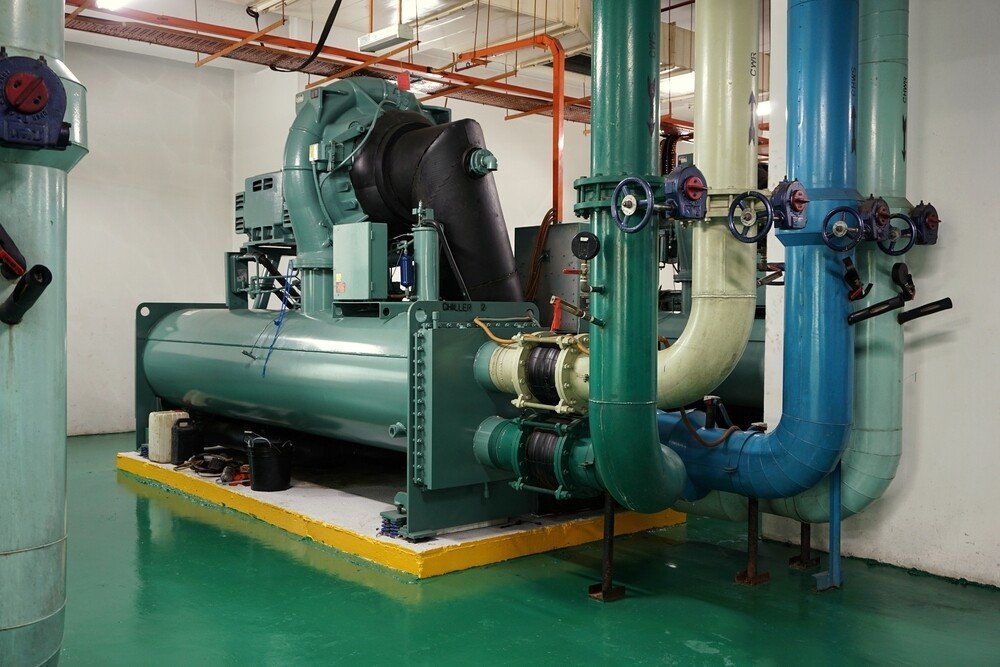
Designing this type of system requires careful planning. The heat source must be stable and strong enough to support continuous operation. Cooling tower integration is also important to manage heat rejection efficiently.
Material selection plays a key role because lithium bromide is corrosive in nature. Therefore, corrosion-resistant materials are used to ensure durability.
Proper sealing is also necessary to prevent air leakage, which can negatively affect system performance and efficiency.
Maintenance and Care
Although the system has fewer mechanical parts, regular maintenance is still required. The concentration of the absorbent solution must be monitored carefully to maintain efficiency.
Heat exchangers need regular cleaning to prevent performance loss. Pumps, seals, and cooling towers must also be checked frequently to ensure smooth operation.
With proper maintenance, the system can operate efficiently for many years without major issues.
Modern Trends and Future Development
Modern systems are becoming more efficient due to improvements in heat exchanger technology and control systems. These advancements help improve performance and reliability.
There is also growing interest in using renewable energy sources such as solar thermal energy to operate absorption cooling systems. This makes them more sustainable and environmentally friendly.
Hybrid cooling systems are also becoming popular, combining absorption and electric chillers to optimize energy usage based on demand.
Misconceptions
A common misunderstanding is that these systems work like traditional compressors. In reality, they operate using a chemical absorption process driven by heat.
Another misconception is that they can be used in homes. In reality, they are designed for large commercial and industrial applications due to their size and cost.
Technical Note
Unlike human-related topics, an Absorption chiller does not have personal details such as age, height, family, or social media presence. It is purely an engineering system designed for cooling applications.
Its value is measured through efficiency, cooling capacity, energy savings, and environmental benefits rather than personal attributes.
Conclusion
An Absorption chiller is a highly efficient cooling technology that uses heat instead of electricity to produce chilled water. It is widely used in industrial plants and large commercial buildings where waste heat can be effectively utilized.
Although it has some limitations such as high installation cost and large size, its long-term energy savings and environmental benefits make it an important part of modern HVAC systems.
As energy demands continue to grow, this technology is expected to play a key role in sustainable cooling solutions in the future.
FAQs
Q: What is an Absorption chiller?
A: An Absorption chiller is a cooling system that uses heat energy instead of electricity to produce chilled water for air conditioning and industrial use.
Q: How does an Absorption chiller work?
A: It works by using heat to separate refrigerant and absorbent, creating a cycle of evaporation and absorption that produces cooling.
Q: Where is an Absorption chiller commonly used?
A: It is mainly used in industries, hospitals, hotels, and large buildings where waste heat or steam is available.
Q: What are the benefits of an Absorption chiller?
A: It reduces electricity use, utilizes waste heat, operates quietly, and offers long equipment life.
Q: Is an Absorption chiller suitable for homes?
A: No, it is mostly designed for large-scale commercial and industrial systems, not residential use.
